
When you try to read a perfect text it becomes a religious experience
“God always likes to veil his symbols a little bit, being among His other attributes, the perfect literary artist.” – Herman Wouk, The Caine Mutiny1
Telepathy: Why we read
Every time we read, we play a game of telepathy. The author uses words to get what was in his or her head into ours. My wife wrote “eggs” on the grocery list. If I pick up eggs, not brussel sprouts, I won the game.
Literature, the kind of stuff you read in university classes, is intentionally more complicated. T. S. Eliot’s “The Waste Land” (1922) set the standard for impenetrability. It had 433 footnotes just to explain the allusions. Elizabeth Bishop’s “A Miracle for Breakfast” (1937) or W.H. Auden’s “Paysage Moralisé”(1933) – both complicated poems called “sestinas” – or Wallace Stevens’ “The Idea of Order at Key West” (1923) had even tighter weaves of word play within themselves, greater gravity, pound for pound, than Eliot’s. Words attain multiple meanings and the poet uses symbols, sound, repetition, cadence and any number of hundreds of well-known ways to play with words (called “rhetorical devices”) to draw connections within and across the text, creating webs of interpenetrating meanings. All these seem to defeat the telepathic purpose of writing. At least, they make it much darn harder to get a clear telepathic message.
The job of the teacher is to get the class to appreciate the purpose of a literary text beyond just telling great stories. We read authors precisely because they didn’t try to be perfectly clear. It’s the varsity version of the telepathy game. The ambiguities and tricks leave us trying to get answers. What was she thinking? Stevens wrote another dense poem, “Notes Toward a Supreme Fiction,” that both describes and illustrates what a great work of literature does. As the title says, however, even this master poet could only scribble “notes” that gesture “toward” what a “supreme fiction” could do. Stevens is telling us that the supreme fiction is transcendent, unattainable. A reader could find traces and glimpses and perhaps whole sublime works that transport them briefly to divine inspiration,
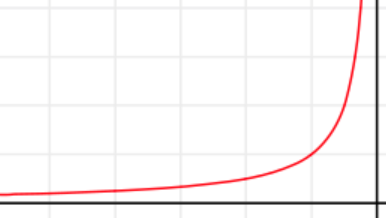
but there are no humanly attainable “supreme fictions.” We can only try to write one before a keen sense of the limitations of our own mortality bring us back to earth. It’s an asymptote, a point that the word artist always approaches but never reaches, an aspiration:
.
Imagine a Perfect Text
Now imagine a perfect author, perfect in the scientific sense: he or she completely comprehends the universe and everything in it, all its laws and interactions down to the quantum level and across its massive, wheeling galaxies in a 19 billion light years expanse, knows the past, present and future, in one integrated whole, an incarnation of science’s god, a Grand Unified Theory. Imagine that the author is also perfect in the active, creative sense, continually exercising every super-power: shaping time, space and matter, reading every mind in the universe all at once, weaving together all the events in that vast universe in every instant always.
Now imagine this perfect author took time out from a busy schedule to compose a perfect literary text. I don’t mean perfect as in “perfectly clear” – that would take the mystery and fun out of it and reduce it to computer code. Perfect in the literary sense, like the hardest poem you ever had to read for literature class: dense, almost impenetrably thick with meaning. Every word has a purpose and has infinite depths of possible meaning and resonates with every other word. Every line interpenetrates and colors every other line, changing how we understand what we just read and will read next. A perfect poem is like a hologram, where every word or phrase contains an aspect of the whole. When Adrienne Rich writes a poem that begins
Night-life.
and ends
…the night becomes our inner darkness, and sleeps
like a dumb beast, head on her paws, in the corner2
She wants the lines to speak to each other and to the dozens of lines between. She wants the poem to change what we feel about darkness, sleep and night. When she uses the word “conceived” in the middle of the poem, we know she means both “having a thought” and “giving birth” and “creating” (including creating the poem we are reading) all at the same time. That’s what poems do. Mean more than one thing at the same time. It’s the opposite of computer code or a grocery list where if something is ambiguous it fails.
In a perfect fiction, the story would be perfectly plotted, more tightly wrought than the best thriller or detective story ever. It would have an intriguing beginning, complicated middle and fulfilling end like other fictions. It would be filled with clues, casual incidents, remarks, and symbolic objects. Even the setting and clothes are metaphorical, lambent with meaning, shadowing events ahead and echoing back, creating a hidden order that defies temporal logic. Chekhov’s gun in Act I must go off before the curtain closes. Is Hemingway’s old man just a simple fisherman? Is the sea only water? Are the “lions” he dreams in the end only wild felines? Why is the sole survivor of the last line in “Moby Dick” named “Ishmael” in the first line? Again, we re-understand the first line through the last. Everything creates a context for everything else. Nothing is wasted. Pages fold over onto each other like a giant accordion. Imagine what a perfect author, who sees yesterday and tomorrow as unfoldings from a single principle, would do with time in a plot.
Imagine how much more difficult – and intriguing and tantalizing and rewarding – this interpretation game, this literature class, would be if the author was perfect? Imagine how much more urgent it would be if you thought the author was real (really perfect) and had all those powers (like creating the universe and everything in it every second everywhere for all eternity, not to mention your own personal destiny and soul).
The Jewish Project
Jews have been playing this game since Moses wrote the Five Books of the Scripture. In fact, it is the premise of Jewish faith. Traditional Jews believe that an omniscient, all-powerful God announced a supreme, transcendent text in front of the entire Israelite nation at Sinai. The text testifies to their collective revelation, the first and only time many thousands of people swear to a simultaneous transcendent experience. Since this event would be impossible to falsify (imagine getting three people to agree to testify to the same thing, let alone hundreds of thousands of disputatious Jews), it is their job to figure out what the message was. Herman Wouk called this author “the perfect literary artist.” Jews who believe that God is the source of the words in the Torah are literally trying to read a depthless, alien, and supernal Mind. Playing the telepathy game is one of the pillars of Judaism. Jews have been playing it for a long time with great urgency.
When Jews read the Bible they assume that God is the Author, or at least He dictated it. When the Israelites, newly freed from slavery in Egypt, were confounded by God’s awesome voice from atop Sinai, they begged their leader Moses to translate the message in comprehensible form. So Moses spent forty days on two different occasions listening to the perfect author and transcribing (some of) the words God spoke to him using a new, incredibly potent invention, the alphabet. It was finite, but had infinite potential: a miraculous communications technology.
Jews know their interpretation of the original transmission is imperfect because they know the author’s mind is by definition ineffable in its vast infinity and superpowers. As a result, the Five Books of Moses have given rise to 3,000 years and millions of words of interpretation. What was He trying to say to us? Each commentary feeds on the original text and on the interpretations that preceded it creating layers of reference and authority and cross-talk. They aren’t like geologic strata frozen into stony stasis, but a dynamic hypertextual broadcast of many-to-many across time and space. When it’s your turn to try, you are humbled by the mighty river. Literally every verse, every word, every letter – even the jots and dots and scribal variations, even the spaces between words – have been already subjected to intense scrutiny by folks who were very dedicated and very smart, some of them writing thousands of years ago.
On the other hand, as mortals try to read and understand the Godmind’s intentions for this text, they have help. After all, the game would be pretty unfair (and useless) if it was written in a completely alien tongue. The very first chapter of the text tells us that the Author endowed us with the operating system, a bit of Himself to ensure that at least some of what’s in the text would be readable, the ability to read and the desire, sometimes an overwhelming urgency, a passion, to open hailing frequencies with Him through the text. Lightning strikes with sudden illumination and an electric rush of feeling. You see transcendent unity, or a piece of it. You’ve made telepathic contact. Call this gleaming pathway of potential understanding “soul” or “consciousness.”
The Longest Game
This game of interpreting a text composed by a perfect author – telepathy with a divine mind – is the longest continuous game of its kind in human history. It begins in the 14th c BCE with the invention of writing and its adoption by a nation of liberated slaves. By all archeological evidence, the phonetic alphabet was only invented once in the 14th century bce in the South Sinai). The Five Books of Moses is also what literary scholars call a “self-reflexive” text: it is aware of its own existence as a written text. In other words it’s an autobiography. It tells us about how it came to be written. If you read between the lines of the Hebrew text, it also tells the story of how the Israelites got the phonetic alphabet and became literate. In any case, it’s the first document in the history of the world to be written in it. It’s still a bestseller.
It explains how God created the world, then humans, and then selected the Hebrew ancestors, Abraham and Sarah, Isaac and Rebecca, Jacob and Rachel and Leah and the Children of Jacob (Israel) to carry the message of God’s oneness and reality. It promises the newly freed slaves the unimaginable: a nation of their own. It gives them a utopian vision of order and humanity – laws for how to behave in that nation, once they get there, not only how to treat their God and each other but how to treat themselves, how to tame and take responsibility for their own thoughts and intentions. In other words for the first time in history we have a document of the interior universe of human experience, subjectivity. It puts people on the hook for the interior reality of other souls. Everyone has one. Imagine a nation built on this monumental recognition.
Forty years wandering the deserts scours off the slavish dependency of the original generation that came out of Egypt. It refines them, rehearses them in the art of governing and protecting themselves collectively. It makes them hungry and determined and practiced as a terrifying military force. They descend onto the land of Canaan under Moses and then his successor, Joshua, Moses’ chosen successor, and they conquer it. They establish their new social experiment, ancient Israel, whose system of laws design a utopia before they even have the land. It is first ruled by prophets and then by kings. Ancient Israel holds onto a kingdom with the Torah as its constitution on and off for several centuries. Like other nations, they are distinguished by glorious achievements but also riven by scandal, failed kings and faltering faith in their original charter. The Babylonians conquer and decimate a weakened Israel in 586 BCE and carry most surviving Jews into captivity. They give the Israelites permission to return to their nation a few decades years later. Many do, many don’t. The Israelites build a Second Temple in the fifth century BCE and again hold onto their kingdom. Conquest by war, sectarian divisions and cultural assimilation especially to the gleaming modernity of their Greek conquerors weaken it on and off, until the Romans send them into the diaspora in 70 CE, an exile that defined Jews until the establishment of the State of Israel in 1948 by the UN.
I repeat the story of the Bible and history of the Jews because from the time when Moses writes down his Five Books, with its laws and legends from a divine author, the text binds the Israelite nation together. Even when the disruptions of history and politics, dispersion, persecution and holocausts rob them of every other constant, including a country of their own, the one thing every other people needed (up until the twentieth century) to maintain their identity over any significant time, It gives them a continuous identity, and still does. Commentaries then become their own central texts, as scholars and rabbis debate their application of the Torah’s laws to dozens of circumstances where the Jews live as guests. Jews enshrine these texts, too, a tradition of debate and commentary called the Mishnah, Gemorah (together, the Talmud) through 500 CE. More written commentaries (by the Geonim in Babylonia) spring up from 800-1000 CE and these, too, are folded into the tradition. The most famous commentators on the whole tradition, Rashi, Rambam and Ramban write in the 11th and 12th centuries all across Spain, France, Italy and Northern Africa, and their work is also folded into the Great Telepathy Game. Jews in every language and country where they lived continue to add hundreds of thousands of pages of additional commentary. Through the Medieval period when Western culture was stagnating, geniuses continue to write and correspond with each other, debating every nuance with the intensity and uncertainty that the original (according to the rules of the game transcendently authored, quasi-impenetrable but perfect text) demands.
Why play this game?
Maybe you cannot persuade yourself that the Five Books of Moses comes down to this century in the way that Jews say it did. And maybe you cannot persuade yourself that the interpretation of that text has any authority, let alone divine authority. But just playing the interpretation game this way- to acting as if you believe – has at least three mind-bending virtues and benefits.
For one you will be investing yourself into a refined version of one of the best things a mind can do with itself: philosophy in its purest form. You’ll be taking a philosophical position – like putting on a uniform to take the playing field – in good faith, so to speak. The whole idea is based on acting as if you believe in an irrational axiom – an unprovable assertion, like why nine innings makes a game and three strikes makes an out – such as “the universe is perfectly rational.” Now build a world of self-consistent thought out of it – say, mathematics.
If you’re an enlightened 21st century modernist, you are likely to wave off the entire Jewish believing tradition and its arcane rituals and practices, not to mention the six billion people in the world who have religious beliefs – as mere foolish superstition. But superstition is a funny word. Philosopher Jacques Derrida brilliantly exposes the foundations of all sciences and philosophies in “superstition.” He plays on the Greek root of the word – “to stand apart or above” – to show how all great attempts to make order of the unknowable cosmos, including science itself, requires an assumption that one fundamental unprovable axiom is true.3 It’s tantamount to a leap of faith. In other words, even physics requires a metaphysics at its core. Derrida suggests that if you dig deeply enough, your secular beliefs in a deterministic accidental cosmos as science suggests it is, is also founded on a superstition.
Secondly, you will be practicing the most important form of self-liberation, which is freedom from ideology. Ideology is toxic to pure interpretation. It poisons our ability to hear what the author is trying to say, to see reality as it is. It’s a noisy monologue in our heads that interferes with the signal. I’ve seen it at work in the literature classroom or even in discussing almost anything political with anybody. Ideology makes you listen for preconceived notions about the intentions of the author. It doesn’t give the author a chance to bring their own point of view. When we read or view or listen to anything created by somebody else we unavoidably bring our assumptions, prejudices, firmly-held beliefs and biases. Can’t read Shakespeare because he was a sexist. Can’t read Twain because he uses the ‘n’ word. Can’t read the Bible because it’s violent and filled with immorality. Or it’s made up by craven politicos and priests forging a narrative that will maintain their power.
If we have an ideology, we want the text to confirm or deny that ideology. You want everything to fit your view of the universe. Of course. That’s also what it means to have a mind. Conception is another word for preconception. If you don’t have a preconceived idea about how everything works, you can’t survive. We’re looking to prove something. You’re either for us or against us. This is true of every artefact, whether a written text, a movie, a virtual reality game, a painting in a museum or the fantastic immersively virtual multimedia product of an AI or some future quantum mind we haven’t yet invented. By positing the perfect author of a perfect if inscrutable text you get to place aside your assumptions, at least while you’re on the playing field. Try it. It’s liberating. And I don’t think ChatGPT can do it very well.
In other words, playing The Game is a very humanizing act. That’s the third fruit of playing it. You get to be fully human. As you play it, you have to pretend you believe in something on faith. The word for it is deluded – from the Latin for ludere – gaming – and de – down. Of course we read it as a form of deprecation, to be diminished by false belief. But we can re-appropriate the word for something positive: down here, in material mortality, all we get to do is play at the true reality, which is transcendent and supernal. To live is to be superstitious. Everyone chooses their delusions. Some just can’t admit they’re deluded.
By playing the Telepathy Game you have the opportunity to take a place to stand apart or above the medium of ideas that you swim in like a fish, without hardly being aware of it, let alone challenging its reality. You can jump out of your bowl – your channel – to see what makes us all human.
Finally, if you believe its Author is who He says He is, this is the most important game in the world. Its purpose is nothing less than to teach you how to live meaningfully, integrated with and acknowledging the creative integrity of an entire cosmos where everything is connected to each other and originates – derives its dynamism – from one source. The text tells you how to do it, yes, but it also shows you why. At the same time, by its perfection of making meaning through complexity, it exemplifies this true order in the universe. Only a supernal mind could have written the Torah and our every act of reading it in good faith awakens the spirit with a telepathic jolt.
ENDNOTES
- Herman Wouk, The Caine Mutiny (Garden City, NY: Doubleday and Company, 1951) p. 90
2. “Adrienne Rich, “The Origins and History of Consciousness,” Dreams of a Common Language: Poems 1974-1977
3. See the transcript of an interview with Jacques Derrida in 1980 in Tellez, F., & Mazzoldi, B. (2007). “The Pocket‐Size Interview with Jacques Derrida,” Critical Inquiry, 33(2), 362–388. https://doi.org/10.1086/511498


 contradiction, and despair. It begins with a brain-bending formula for purification – the red heifer – which no one has convincingly explained. It is followed by calamity after calamity. Miriam and Aaron, Moses’ sister and brother, two of the greatest prophets, die. This is a national tragedy for the Israelites but an inconceivably painful personal loss for Moses. I have one brother and one sister. I can only imagine what Moses felt. Yet, his grief isn’t even mentioned, maybe because the story has to move on to a lot more dismal news.
 Earliest archeological evidence, like the stone idol from Serabit el-Khadem, places the origin of the alphabet in the South Sinai (!) about sixty miles north of Mount Sinai, around the 15th-14th C BCE (!), just when tradition places the Exodus of the Hebrew slaves from Egypt.
 Telepathy
You must be logged in to post a comment.