The Divine Telepathy Game – A Jewish Project

When you try to read a perfect text it becomes a religious experience

“God always likes to veil his symbols a little bit, being among His other attributes, the perfect literary artist.” – Herman Wouk, The Caine Mutiny1

Telepathy: Why we read

Every time we read, we play a game of telepathy. The author uses words to get what was in his or her head into ours.  My wife wrote “eggs” on the grocery list. If I pick up eggs, not brussel sprouts, I won the game. 

Literature, the kind of stuff you read in university classes, is intentionally more complicated. T. S. Eliot’s “The Waste Land” (1922) set the standard for impenetrability. It had 433 footnotes just to explain the allusions. Elizabeth Bishop’s “A Miracle for Breakfast” (1937) or W.H. Auden’s “Paysage Moralisé”(1933) – both complicated poems called “sestinas” – or Wallace Stevens’ “The Idea of Order at Key West” (1923) had even tighter weaves of word play within themselves, greater gravity, pound for pound, than Eliot’s. Words attain multiple meanings and the poet uses symbols, sound, repetition, cadence and any number of  hundreds of well-known ways to play with words (called “rhetorical devices”) to draw connections within and across the text, creating webs of interpenetrating meanings. All these seem to defeat the telepathic purpose of writing. At least, they make it much darn harder to get a clear telepathic message.

The job of the teacher is to get the class to appreciate the purpose of a literary text beyond just telling great stories. We read authors precisely because they didn’t try to be perfectly clear. It’s the varsity version of the telepathy game. The ambiguities and tricks leave us trying to get answers. What was she thinking? Stevens wrote another dense poem,  “Notes Toward a Supreme Fiction,” that both describes and illustrates what a great work of literature does.  As the title says, however, even this master poet could only scribble “notes” that gesture “toward” what a “supreme fiction” could do. Stevens is telling us that the supreme fiction is transcendent, unattainable. A reader could find traces and glimpses and perhaps whole sublime works that transport them briefly to divine inspiration,
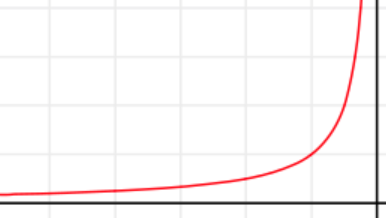
but there are no humanly attainable “supreme fictions.” We can only try to write one before a keen sense of the limitations of our own mortality bring us back to earth. It’s an asymptote, a point that the word artist always approaches but never reaches, an aspiration:

Imagine a Perfect Text

Now imagine a perfect author, perfect in the scientific sense: he or she completely comprehends the universe and everything in it, all its laws and interactions down to the quantum level and across its massive, wheeling galaxies in a 19 billion light years expanse, knows the past, present and future, in one integrated whole, an incarnation of science’s god, a Grand Unified Theory.  Imagine that the author is also perfect in the active, creative sense, continually exercising every super-power: shaping time, space and matter, reading every mind in the universe all at once, weaving together all the events in that vast universe in every instant always.

Now imagine this perfect author took time out from a busy schedule to compose a perfect literary text. I don’t mean perfect as in “perfectly clear” – that would take the mystery and fun out of it and reduce it to computer code. Perfect in the literary sense, like the hardest poem you ever had to read for literature class: dense, almost impenetrably thick with meaning. Every word has a purpose and has infinite depths of possible meaning and resonates with every other word. Every line interpenetrates and colors every other line, changing how we understand what we just read and will read next. A perfect poem is like a hologram, where every word or phrase contains an aspect of the whole. When Adrienne Rich writes a poem that begins

Night-life.

and ends 

…the night becomes our inner darkness, and sleeps

like a dumb beast, head on her paws, in the corner2

She wants the lines to speak to each other and to the dozens of lines between. She wants the poem to change what we feel about darkness, sleep and night. When she uses the word “conceived” in the middle of the poem, we know she means both “having a thought” and “giving birth” and “creating” (including creating the poem we are reading) all at the same time. That’s what poems do. Mean more than one thing at the same time. It’s the opposite of computer code or a grocery list where if something is ambiguous it fails.  

In a perfect fiction,  the story would be perfectly plotted, more tightly wrought than the best thriller or detective story ever. It would have an intriguing beginning, complicated middle and fulfilling end like other fictions. It would be filled with clues, casual incidents, remarks, and symbolic objects. Even the setting and clothes are metaphorical, lambent with meaning, shadowing events ahead and echoing back, creating a hidden order that defies temporal logic. Chekhov’s gun in Act I must go off before the curtain closes. Is Hemingway’s old man just a simple fisherman? Is the sea only water? Are the “lions” he dreams in the end only wild felines? Why is the sole survivor of the last line in  “Moby Dick” named “Ishmael” in the first line? Again, we re-understand the first line through the last. Everything creates a context for everything else. Nothing is wasted. Pages fold over onto each other like a giant accordion. Imagine what a perfect author, who sees yesterday and tomorrow as unfoldings from a single principle, would do with time in a plot.

Imagine how much more difficult – and intriguing and tantalizing and rewarding –  this interpretation game, this literature class, would be if the author was perfect? Imagine how much more urgent it would be if you thought the author was real (really perfect) and had all those powers (like creating the universe and everything in it every second everywhere for all eternity, not to mention your own personal destiny and soul). 

The Jewish Project

Jews have been playing this game since Moses wrote the Five Books of the Scripture. In fact, it is the premise of Jewish faith.  Traditional Jews believe that an omniscient, all-powerful God announced a supreme, transcendent text in front of the entire Israelite nation at Sinai. The text testifies to their collective revelation, the first and only time many thousands of people swear to a simultaneous transcendent experience. Since this event would be impossible to falsify (imagine getting three people to agree to testify to the same thing, let alone hundreds of thousands of disputatious Jews), it is their job to figure out what the message was. Herman Wouk called this author “the perfect literary artist.” Jews who believe that God is the source of the words in the Torah are literally trying to read a depthless, alien, and supernal Mind. Playing the telepathy game is one of the pillars of Judaism. Jews have been playing it for a long time with great urgency.

When Jews read the Bible they assume that God is the Author, or at least He dictated it. When the Israelites, newly freed from slavery in Egypt, were confounded by God’s awesome voice from atop Sinai, they begged their leader Moses to translate the message in comprehensible form. So Moses spent forty days on two different occasions listening to the perfect author and transcribing (some of) the words God spoke to him using a new, incredibly potent invention, the alphabet. It was finite, but had infinite potential: a miraculous communications technology.

Jews know their interpretation of the original transmission is imperfect because they know the author’s mind is by definition ineffable in its vast infinity and superpowers. As a result, the Five Books of Moses have given rise to 3,000 years and millions of words of interpretation. What was He trying to say to us? Each commentary feeds on the original text and on the interpretations that preceded it creating  layers of reference and authority and cross-talk. They aren’t like geologic strata frozen into stony stasis, but a dynamic hypertextual broadcast of many-to-many across time and space. When it’s your turn to try, you are humbled by the mighty river.  Literally every verse, every word, every letter – even the jots and dots and scribal variations, even the spaces between words – have been already subjected to intense scrutiny by folks who were very dedicated and very smart, some of them writing thousands of years ago. 

On the other hand, as mortals try to read and understand the Godmind’s intentions for this text,  they have help. After all, the game would be pretty unfair (and useless) if it was written in a completely alien tongue. The very first chapter of the text tells us that the Author endowed us with the operating system, a bit of Himself to ensure that at least some of what’s in the text would be readable, the ability to read and the desire, sometimes an overwhelming urgency, a passion, to open hailing frequencies with Him through the text. Lightning strikes with sudden illumination and an electric rush of feeling. You see transcendent unity, or a piece of it. You’ve made telepathic contact.  Call this gleaming pathway of potential understanding “soul” or “consciousness.”

The Longest Game

This game of interpreting a text composed by a perfect author – telepathy with a divine mind –  is the longest continuous game of its kind in human history. It begins in the 14th c BCE with the invention of writing and its adoption by a nation of liberated slaves. By all archeological evidence, the phonetic alphabet was only invented once in the 14th century bce in the South Sinai). The Five Books of Moses is also what literary scholars call a “self-reflexive” text: it is aware of its own existence as a written text. In other words it’s an autobiography. It tells us about how it came to be written. If you read between the lines of the Hebrew text, it also tells the story of how the Israelites got the phonetic alphabet and became literate. In any case, it’s the first document in the history of the world to be written in it. It’s still a bestseller.

 It explains how God created the world, then humans, and then selected the Hebrew ancestors, Abraham and Sarah, Isaac and Rebecca, Jacob and Rachel and Leah and the Children of Jacob (Israel) to carry the message of God’s oneness and reality. It promises the newly freed slaves the unimaginable: a nation of their own. It gives them a utopian vision of order and humanity – laws  for how to behave in that nation, once they get there, not only how to treat their God and each other but how to treat themselves, how to tame and take responsibility for their own thoughts and intentions. In other words for the first time in history we have a document of the interior universe of human experience, subjectivity. It puts people on the hook for the interior reality of other souls. Everyone has one.  Imagine a nation built on this monumental recognition.

Forty years wandering the deserts scours off the slavish dependency of the original generation that came out of Egypt. It refines them, rehearses them in the art of governing and protecting themselves collectively. It makes them hungry and determined and practiced as a terrifying military force. They descend onto the land of Canaan under Moses and then his successor, Joshua, Moses’ chosen successor, and they conquer it. They establish their new social experiment, ancient Israel, whose system of laws design a utopia before they even have the land. It is first ruled by prophets and then by kings. Ancient Israel holds onto a kingdom with the Torah as its constitution on and off for several centuries. Like other nations, they are distinguished by glorious achievements but also riven by scandal, failed kings and faltering faith in their original charter. The Babylonians conquer and decimate a weakened Israel in 586 BCE and carry most surviving Jews into captivity. They give the Israelites permission to return to their nation a few decades years later.  Many do, many don’t. The Israelites build a Second Temple in the fifth century BCE and again hold onto their kingdom. Conquest by war, sectarian divisions and cultural assimilation especially to the gleaming modernity of their Greek conquerors weaken it on and off, until the Romans send them into the diaspora in 70 CE, an exile that defined Jews until the establishment of the State of Israel in 1948 by the UN.

I repeat the story of the Bible and history of the Jews because from the time when Moses writes down his Five Books, with its laws and legends from a divine author, the text binds the Israelite nation together. Even when the disruptions of history and politics, dispersion, persecution and holocausts rob them of every other constant, including  a country of their own, the one thing every other people needed (up until the twentieth century) to maintain their identity over any significant time, It gives them a continuous identity, and still does. Commentaries then become their own central texts, as scholars and rabbis debate their application of the Torah’s laws to dozens of circumstances where the Jews live as guests. Jews enshrine these texts, too, a tradition of debate and commentary called the Mishnah, Gemorah (together, the Talmud) through 500 CE. More written commentaries (by the Geonim in Babylonia) spring up from 800-1000 CE and these, too, are folded into the tradition.  The most famous commentators on the whole tradition, Rashi, Rambam and Ramban write in the 11th and 12th centuries all across Spain, France, Italy and Northern Africa, and their work is also folded into the Great Telepathy Game. Jews in every language and country where they lived continue to add hundreds of thousands of pages of additional commentary. Through the Medieval period when Western culture was stagnating, geniuses continue to write and correspond with each other, debating every nuance with the intensity and uncertainty that the original (according to the rules of the game transcendently authored, quasi-impenetrable but perfect text) demands.

Why play this game?

Maybe  you cannot persuade yourself that the Five Books of Moses comes down to this century in the way that Jews say it did. And maybe you cannot persuade yourself that the interpretation of that text has any authority, let alone divine authority. But just playing the interpretation game this way- to acting as if you believe – has at least three mind-bending virtues and benefits. 

For one you will be investing yourself into a refined version of one of the best things a mind can do with itself:  philosophy in its purest form. You’ll be taking a philosophical position – like putting on a uniform to take the playing field – in good faith, so to speak. The whole idea is based on acting as if you believe in an irrational axiom – an unprovable assertion, like why nine innings makes a game and three strikes makes an out – such as “the universe is perfectly rational.” Now build a world of self-consistent thought out of it – say, mathematics. 

If you’re an enlightened 21st century modernist, you are likely to wave off the entire Jewish believing tradition and its arcane rituals and practices, not to mention the six billion people in the world who have religious beliefs – as mere foolish superstition. But superstition is a funny word.  Philosopher Jacques Derrida brilliantly exposes the foundations of all sciences and philosophies in “superstition.” He plays on the Greek root of the word – “to stand apart or above” – to show  how all great attempts to make order of the unknowable cosmos, including science itself, requires an assumption that one fundamental unprovable axiom is true.3 It’s tantamount to a leap of faith.  In other words, even physics requires a metaphysics at its core. Derrida suggests that if you dig deeply enough, your secular beliefs in a deterministic accidental cosmos as science suggests it is, is also founded on a superstition

Secondly, you will be practicing the most important form of self-liberation, which is freedom from ideology. Ideology is toxic to pure interpretation. It poisons our ability to hear what the author is trying to say, to see reality as it is. It’s a noisy monologue in our heads that interferes with the signal. I’ve seen it at work in the literature classroom or even in discussing almost anything political with anybody. Ideology makes you listen for preconceived notions about the intentions of the author. It doesn’t give the author a chance to bring their own point of view. When we read or view or listen to anything created by somebody else we unavoidably bring our assumptions, prejudices, firmly-held beliefs and biases. Can’t read Shakespeare because he was a sexist.  Can’t read Twain because he uses the ‘n’ word. Can’t read the Bible because it’s violent and filled with immorality. Or it’s made up by craven politicos and priests forging a narrative that will maintain their power.

If we have an ideology, we want the text to confirm or deny that ideology. You want everything to fit your view of the universe.  Of course. That’s also what it means to have a mind. Conception is another word for preconception. If you don’t have a preconceived idea about how everything works, you can’t survive. We’re looking to prove something.  You’re either for us or against us.  This is true of every artefact, whether a written text, a movie, a virtual reality game, a painting in a museum or the fantastic immersively virtual multimedia product of an AI or some future quantum mind we haven’t yet invented. By positing the perfect author of a perfect if inscrutable text you get to place aside your assumptions, at least while you’re on the playing field. Try it. It’s liberating.  And I don’t think ChatGPT can do it very well.

In other words, playing The Game is a very humanizing act. That’s the third fruit of playing it.  You get to be fully human. As you play it, you have to pretend you believe in something on faith. The word for it is deluded – from the Latin for ludere – gaming – and de – down. Of course we read it as a form of deprecation, to be diminished by false belief.  But we can re-appropriate the word for something positive: down here, in material mortality, all we get to do is play at the true reality, which is transcendent and supernal. To live is to be superstitious. Everyone chooses their delusions. Some just can’t admit they’re deluded.  

By playing the Telepathy Game you have the opportunity to take a place to stand apart or above the medium of ideas that you swim in like a fish, without hardly being aware of it, let alone challenging its reality. You can jump out of your bowl – your channel – to see what makes us all human.

 Finally, if you believe its Author is who He says He is, this is the most important game in the world. Its purpose is nothing less than to teach you how to live meaningfully, integrated with and acknowledging the creative integrity of an entire cosmos where everything is connected to each other and originates – derives its dynamism – from one source. The text tells you how to do it, yes, but it also shows you why. At the same time, by its perfection of making meaning through complexity, it exemplifies this true order in the universe. Only a supernal mind could have written the Torah and our every act of reading it in good faith awakens the spirit with a telepathic jolt.


ENDNOTES

  1. Herman Wouk, The Caine Mutiny (Garden City, NY: Doubleday and Company, 1951) p. 90

2. “Adrienne Rich, “The Origins and History of Consciousness,” Dreams of a Common Language: Poems 1974-1977

3. See the transcript of an  interview with Jacques Derrida in 1980 in Tellez, F., & Mazzoldi, B. (2007). “The Pocket‐Size Interview with Jacques Derrida,” Critical Inquiry, 33(2), 362–388. https://doi.org/10.1086/511498

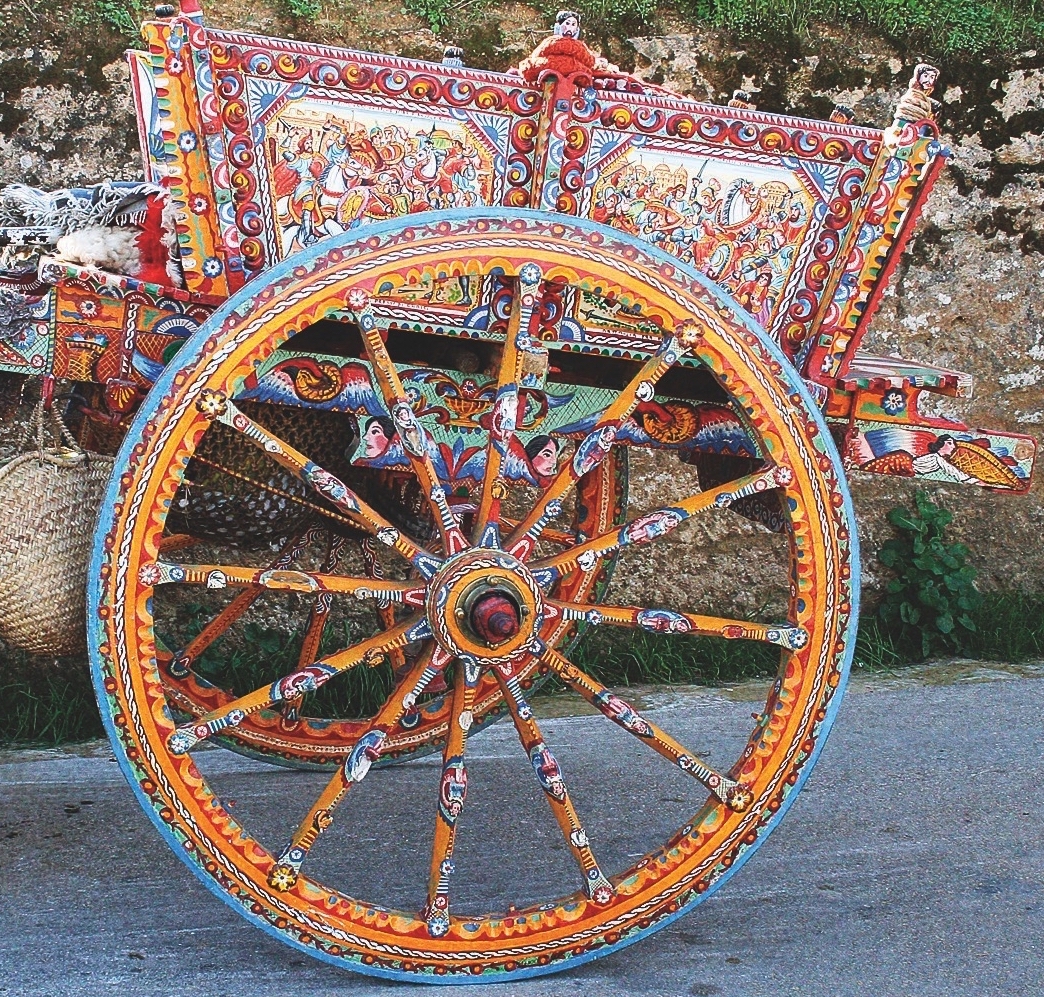
A Wagon of Poetry Brings the Hebrews through the Portal of History

רַב עוֹד־יוֹסֵף בְּנִי חָי  (Gen 45:28)

The story of Joseph and his brothers is one of the most novelistic passages in the Bible, filled with hidden motives, deep emotion, staged revelations, ambiguous plots and an apparently happy ending. Joseph finally reunites with the eleven brothers in Egypt. He puts them through an elaborately staged torture in Pharaoh’s court, but finally Joseph reveals his true identity and can’t wait to see his father, so he sends his brothers back to fetch him.

The Bible lavishes ten verses on Pharaoh’s and Joseph’s eagerness to get all of the Hebrews to Egypt. They load donkeys and wagons with clothing and goods and gold to bring back the families and entice Joseph’s father, Jacob, now 130 years old, to come too.

Nonetheless, when the brothers return to Canaan and tell Jacob the good news, his “heart goes numb.” The brothers give him CPR with reassurances, Joseph’s fabulous story, and showing him the wealth Joseph sent. When Jacob sees all the stuff and hears their story, his first reaction is, “רַב עוֹד־יוֹסֵף בְּנִי חָי.”

The Hebrew has so much feeling and hidden meaning it should be a song, maybe a Jewish anthem, and I want to pay it tribute. While the usual translation captures the sense –  “Enough! My son Joseph still lives!” – the poetry and depth is lost. The Hebrew eye might immediately notice the repetition of three words for abundance in a row:

COLORFUL+WAGON+(1)
  • rav רַב – is translated as an exclamation “enough,” but it really means much, many, great
  • ohd, עוֹד – an adverb that seems to modify “live” as in “Joseph still lives” but beyond continuance (still) also implies besides, again, more and directly modifies Joseph as in “more (still, yet) Joseph …”
  • Yosef יוֹסֵף – Joseph’s name is prophetic. It means He will add.

Together the three words express “much more greater enlargement.” Jacob’s sudden burst of emotion expresses deep currents.

“Much more greater enlargement!”

Jacob knows the wagons are symbolic of Joseph’s essence and exclaims it with a burst of emotion. His favorite son’s very presence, even as a young boy, seems to make life bigger and more extravagant. Joseph’s lavish coat is just outward expression of his unrestrained charisma. Even his dreams are tinged with megalomania, but he brings his fantastic dreams and those of others to life. Through him, dreams become true. Joseph’s whole life is the story of bursting the bounds of one adversity after another: snake-filled pits, slavery, jail, marooned in a strange country. Everywhere he goes, he expands the borders of life itself. He brings fabulous fantasies into reality. He is the source of survival and abundance for his adopted nation, Egypt, and his own tribe, the Hebrews. The wagonloads of goodies symbolize his lavish success.

Jacob evokes this enlargement of reality that Joseph brings to the world here: “My son adds so much more life.” The father sees the son’s spiritual potential, not the material illusion of the coat that arouses his brothers. Jacob isn’t swayed by the lavish riches in front of him. He’s not toting up the wealth presented to his earthly senses, but what it evokes in his heart. He is rich in material things, but the loss of his beloved son has dug a pit of loss in his soul. And now, by this wagon, he sees instantly Joseph has been miraculously reincarnated.

And then, in case we thought we were just kanoodling around with wordplay, there’s a clincher. When Jacob revives, he is called by his birthname: “the spirit of Jacob revived.” But in the next verse he is “Israel,” the prophetic name he got after winning a wrestling match with an angel. Israel is Jacob’s spirit name, the name of the father of nation that is redeemed – resuscitated – from slavery in Egypt and who also get a lavish gift beckoning them to their destiny. In short, the verse is altogether prophetic, concentrating the whole history of the Hebrews in a few words. Jacob suffers a mini-death and is resurrected as Israel by his son Joseph’s spiritual largesse. He knows the prophecy of exile that awaits his family and their descendants, yet immediately embarks on the fateful journey almost joyfully.

Now if we read Jacob’s cry sideways, the whole verse says,

And he said, ‘Israel to have much more life must go down to my son before I (Israel) die’.

They will go to Egypt to survive the famine as a re-united family, endure a spiritual famine, and emerge as Israel. As Hebrews they all must march through the portal Joseph has opened in history to be resurrected as liberated slaves with the Torah as their fusion engine.

Rashi reads the poetry

Then Rashi tells us there’s yet another secret message encoded in the wagons. The word for wagons – ahgalot – contains a pun for eglot – calves. They may even be etymologically related at a deep level to the primitive root for turning, circling, wheeling.  Just as calves cavort by running in circles, wagons run on wheels that turn round and round. In that pun, Jacob sees the last law in the Torah father and son studied before Joseph disappeared: the eglah arufah. If a corpse is found in the wilderness between two cities, how do we assign responsibility for burial and pursuing justice? You can’t just let the corpse lie there. The priests of the closest town must go into the wilderness, sacrifice a calf by breaking its neck, throw it over a cliff, and thus cancel the bill for an unsolved injustice and guilt that would come due to innocent townsfolk. (Deut 21:1-9)

On the surface, Rashi’s neat detective work forms a nice sermon (never mind the anachronism of father and son reading the Torah before Moses brings it down from Sinai. The sages assume that the patriarchs had the Torah).  We now see that all the prior stagecraft about loading the eleven wagons with stuff from Egypt fior the brothers to bring back to Jacob in Canaan carried a double message from the prodigal son to grieving father that only the two of them would understand.

Poetry of the Torah and dreams connect the material and spiritual world

The Lubavitcher Rebbe expands our understanding of this ritual. Though he doesn’t refer to this scene with the wagon explicitly, he deepens our understanding of it even more by parsing the meaning of the wagon-calf secret message Joseph sent to Jacob. The elaborate ritual involves sacrificing the calf by severing its neck. Why? The Rebbe calls the neck “the precarious joint.” In the Torah, he notes,

“the neck is a common metaphor for the Holy Temple.” It links “heaven and earth, points of contact between the Creator and His creation. … G-d, who transcends the finite …  chose to designate a physical site and structure as the seat of His manifest presence in the world …. The Sanctuary, then, is the ‘neck’ of the world … the juncture that connects its body to its head and channels the flow of consciousness and vitality from the one to the other.”

“The Neck,” Chabad.org)

The unclaimed corpse leaves unattached guilt lying around in a no-man’s land unaccounted for. It is intolerable. The guilt must be expiated. If we cannot determine which city owns it, we sever the calf’s neck to show that the integrity of the Holy Land has been broken and restore it symbolically.

Joseph’s wagon is an invitation to walk through the portal in history. Time collapses as the whole vista of Hebrew destiny appears to Jacob upon seeing the wagon laden with gifts. That walk leads down to Egypt and then up to Sinai and the Torah and eventually the landscape of the Promised Land, an Israel with towns and a system of justice and order and holy calculus so sensitive that an unaccounted for corpse has to be brought back into balance. The Torah is itself the gateway to a whole other consciousness about the world for an entire nation, connecting the material world to the spiritual world.  Joseph here is the avatar of this new understanding, introducing dreamspace into reality, enlarging the world through the flow of consciousness and vitality between the different channels in our senses. Reading the Torah as poetry enables us to rehearse, to recapitulate this connection over and over. We are always standing before the wagons, laden with treasures, symbol of resuscitation and reading secret messages, interpretation.

Layers of meanings and cross-references within the text and outside it deepen rather than interfere with one another. The means to deciphering the scene before us is not only through our senses but by short-circuiting our rational, empirical senses. They see only the goodies. We need to open up to the mysteries inside the poetry, the associative, artistic, aesthetic resonance of the images and words acting together. We need to have the Joseph super-power, to see the reality in the dream. Like him, and like Jacob on seeing the wagon, we must create a channel, a precarious joint, from the spiritual realm to the material one. This way of reading life and the Torah and the world before us enlarges everything. The original Hebrew, without vowels or punctuation is Moses’ transcription of God’s one long transcendent utterance atop Sinai and virtually demands that we approach it with openness.

I’m no prophet, but I imagine this is how it must work and why the prophets are such great poets: they are seized by a sudden flooding expansion of their senses, a wheeling, prophetic perception of past and future unfolding in the fateful moment. We can get some small taste of this if we read the poetry in the Hebrew: Israel, summoned by a secret sign from his son, sings a song of extravagant overflowing joy and in that moment can’t wait to go down to Egypt.

Telepathy: A personal note

These demure humming boxes contained the densest working out, the highest tide of everything that collective ingenuity had yet learned to pull off. It housed the race’s deepest taboo dream, the thing humanity was trying to turn itself into.

Richard Price, Plowing the Dark

Here are the four questions that the concept of telepathy helps me answer:

1. Where we are: Our desire for telepathy tells us what we are turning ourselves into: truly intersubjective beings, transmitting pure thought, sensation, and experience to each other instantaneously, without mediation or translation. Artificial intelligence, virtual reality, creating artificial humans, finding alien life, colonizing other planets. Telepathy. These are the science fiction dreams that actually seem to propel billion or trillion dollar worldwide industries. But all of them seem to lie just out of reach, beckoning us. We’re always so close. We’re always not quite there, like Zeno’s Paradox, closing the gap but never reaching our target. Seeing all communication as telepathy tells us something about what it means to be human, maybe a little about what it means to be a living thing at all. My dog is barking, the bees are dancing, the trees are reading each other’s chemical minds. To be alive seems to be to aspire to telepathy.

OLYMPUS DIGITAL CAMERA
Jellyfish at the Monterey Aquarium, 2006

2. What happened? If we use the dream of telepathy as a lens to look back, it helps us understand our history. Older communications technologies – the alphabet, printing press, radio, TV, and the Internet, were revolutions in telepathy, coming with increasing speed through the centuries and now decades, driving us to this ideal: getting experience and thought to pass from mind to mind. Each came with new hopes, new ways of interacting and defining ourselves, and new gods.

3. What comes next? This trajectory helps us map what will come next: Technologically Mediated Telepathy (TMT), or  brain-to-brain experiences through the computer, aided by AI.

4. How to really read: This is minor but it is dear to my heart as an old literature professor: Telepathy implies a way of reading. Reading telepathically means really trying to find out what the author is thinking and intending before finding confirmation of my own bias or theory in the text. They should teach it in every literature class: how to read beyond ideology. Reading is an act of intimacy between the author and me. It comes with a certain responsibility that accompanies all acts of conjugation. I submit to entering and being possessed by another’s mind. When a writer sits down to write in good faith, even the most profane, they are writing a form of liturgy. And I should try to read faithfully, in good faith, like a prayer, beyond prejudice. Every time we try to make ourselves understood or try to understand another, there is a divine hope.

******

About Me:

I’m the author of The Soft Machine: Cybernetic Fiction (Methuen/Routledge), Rope Dances (short stories, The Fiction Collective); A Short Guide to Writing About Science, (HarperCollins & Pearson) and other books, as well as reviews, essays, blogs, fiction, plays, and articles. For 21 years, I was a professor of literature and media at William & Mary and then at Rensselaer. I am also the former CEO, co-founder and executive of several e-learning companies and programs at universities, non-profits and the private sector.

Inspired by the launch of the World Wide Web with the Mosaic browser, I originally explored versions of this material during a sabbatical year as a Fulbright scholar at the Technion in Israel (1993-94). I indulgently took it up with a doctoral class in literature at Rensselaer in 1994. I am indebted to them for their skepticism and indulgence of these “porushian studies,” as they mockingly called my rants, and with good reason. Though wisdom be eternal, cleverness is fleeting, and probably narcissistic.

I published a short version of the larger project appeared here in Mots Pluriels, an Australian journal. Some of it showed up in bits and pieces in numerous dense publications (e.g. “Hacking the Brainstem: Postmodern Metaphysics and Stephenson’s Snow Crash” in Configurations, a Johns Hopkins University journal.) I am most recently grateful to Jason Silva who both resurrected my work and my interest in it by meeting me in San Francisco and then mentioning it in one of his ecstatic video posts “The Urge to Merge.”

I thank my many Talmud teachers and classmates past and present, who often served as the first, suffering audiences, saved me from much foolishness, and have immeasurably enriched my life and thinking. I am especially grateful to my wife, Sally, for her deep and abiding forbearance, to my children, and to my granddaughters for gazing into my eyes for long minutes, even as babies, with questions I can’t answer.

I am inviting you to get lost in this labyrinth, dear telepath, and if you have the time, like a fellow spider in this web, drop me a sticky line at dporush@yahoo.com.

We Are All Telepaths: The ontogeny of speech recapitulates the phylogeny of civilization

My Granddaughter Siona

As I write this, my granddaughter Siona is just shy of her second birthday, God bless her. She is very communicative and expressive and highly intelligent (aren’t all granddaughters?)

But she doesn’t speak much yet, at least in English. She has a few monosyllables: da, ma, pa, dee, co, ekk, choo, [sniff with nose = flowers], [cluck with tongue = horsey].. and a couple dozen signs: rub tummy for hunger, squeeze hand for milk, put fists together for “more,” thump chest for “teddy,” slap sides for “dog”…

All of us in her life know what these signs mean. And if you look in her eyes, she will hold your gaze and, well… I could write and she is telling volumes. But she makes plain her frustration. She is feeling and wanting to tell sentences, and through series of signs and sounds she is, but we, the adults, are only getting parts.  Telepathy would be so much better.

In Siona’s frustration, you can see she discovered in the last few months that telepathy doesn’t exist. But until recently, she thought it did. Without belaboring the point, we know what lies before her, and though she doesn’t know the particulars, she knows the meaning of it. She will have to labor to learn how to make all the intimates around her understand what is in her head. And the monumental labor, the painful, glorious, fun of the journey in front of her makes me want to cry. It is like watching her getting kicked out of Eden. In fact, it is exactly like getting kicked out of Eden and losing your Adamic prelapsarian language. Siona is now learning she will have to communicate by the sweat of her brow and claw her way back into making people around her understand a vague and veiled version of what was just recently all-at-once known, obvious, and true.

Soon enough, she will experience the catastrophe of the Tower of Babel.

As she slowly adds words and connects them syntactically and begins her voyage through those infinite but constrained channels of spoken language and then written language, she will re-enact the evolution of TMT, and slowly lose her infantile, divine conviction that everyone is telepathic and learn how to play the keyboards of these telepathic technologies we invent.

Siona’s linguistic and media ontogeny will recapitulate the phylogeny of our civilizations. jellyfishflower2And so do all of our personal journeys. So the urge to be telepathic is something we carry with us ontologically, in our own life history. We can excavate and use this desire both to interrogate the history of learning to use language and each individual act of communication.

Every time we speak, write, sing there is at least some residue of desire and urgency to get inside the heads of others and let them into ours. We are all telepaths.

Almost Really Real: How the word “virtual” deconstructed itself and what its curious etymology tells us about the future of virtual reality and truthiness   

Chasing virtual reality, what we used to call cyberspace, has spawned a multi-trillion dollar worldwide industry, which makes it a pretty sexy phrase, right? But do we really know what we mean when we use it? In normal conversation today, when we say something is virtually true we’re saying something like,

“It’s just about almost perfectly completely and for all intents and purposes as effectively true as truth … but not essentially, really true.” 

And when we call it virtual reality, we mean a technology meant to fool you into thinking you’re experiencing something you’re not. We’re saying it is “almost really” real, or virtually real – a beautiful oxymoron, and more or less accurate, depending on how cool your hookup gear and the simulations inside are. 

Since we’ve made a trillion-dollar bet on it, wouldn’t it be valuable to know what we mean when we use it? What deep human urge does it promise to fulfill? What itch is it scratching? Perhaps, armed with that deeper understanding, we may even be able to predict where it’s going. I think we can do that by looking at the curious history of the word virtual itself.  Continue reading “Almost Really Real: How the word “virtual” deconstructed itself and what its curious etymology tells us about the future of virtual reality and truthiness   “

The end of the book, tech-mediated telepathy, and other hallucinogens

This is a heavily redacted prophesy about the end of the book and the coming of machine-mediated brain-to-brain communication I wrote in February 1993 to Kali Tal as part of a longer exchange about hallucinogenic drugs, the coming of mind-to-mind communication through VR, and other things.

bump_1879916c
Bumpercar enhanced empaths

Tools are human.

There are no technologies without humanities.

Artificial intelligence is a metaphor for the psyche. (And not much more, believe me.) Just as the idea of a psyche is a contraption of cognitive psychology and philosophy, and the brain is a concoction of neurology, so is AI just an idea of what it wants human intelligence to be. (A machine.)

Multimedia, even as virtual reality, is a metaphor for the sensorium, a perceptual gadget beholden to poetics and media studies. It’s got a wonderful future, but it’s just a stab in the dark theater of our desire to be more intimate and stimulating.

Nothing is yet quicker than the light of the slow word.

Yes, we are in the late age of print. What we whiff now is not the smell of ink but the smell of loss, of burning towers or men smoking cigars in the drawing room, thinking they are building an empire. Hurry up please, it’s time. Yes, the time of the book has passed. But it will persist to give glorious pleasure, like other obsolete forms that continually renew themselves and the soul: the poem, dance, graffiti. The book is dead, long live the book.

We will continue to read from paper just as we continue to write poems and tell stories. Or put bannisters in elevators. Yeah, like that’s gonna help you if that cable snaps. The persistence of obsolete forms, attached to the idea of the material thing called a book, which is after all just one of many technologies for delivering the word that began with scrawls on clay and stone. Think of the book as a metaphor for the process it inscribes, for getting one’s solo thoughts into many other heads, one at a time. Just one of many technologies we’ve devised to get what’s in my brain into yours and vice versa.  Tech-mediated-telepathy. TMT.

When Sony debuted Discman, a portable, mini-CD the size of a Walkman, capable of holding 100,000 pages of text, a discussion on the Gutenberg listserv complained with pain, with nostos algia, wistful pain for home: “The smell of ink … the crinkle of pages…”

“But you can’t read it in bed,” she said, everyone’s last redoubt, the last-ditch argument. As if it was lovemaking. It was lovemaking. As if.

Meanwhile in far-off laboratories of what Stuart Moulthrop calls the “Military-Infotainment Complex” at Warner, Disney or IBApple and MicroLotus, a group of scientists work on synchronous smell-o-vision with real time simulated fragrance degradation shifting from fresh ink to old mold. Another group builds raised-text flexible touch screens with laterally facing windows that look and turn like pages, crinkling and sighing as they exfoliate.

“But the dog can’t eat it,” someone protests. Smiling silently, the techies go back to their laboratories with bags of silicon kibbles.

Swimming across this undertow to save ourselves from being swept away, tilting at this windmill, we should keep alive the idea of what the book was and can be, Don Quixote. Tristram Shandy. Gravity’s Rainbow.

In an age when people buy and do not read more books than have ever been published before, perhaps we will each become like the living books of Truffaut’s version of Bradbury’s Fahrenheit 451, vestal readers walking along meandering rivers of light just beyond the city of text. We face their task now, resisting what flattens us, re-embodying reading as movement, as an action rather than a thing, appropriating the metaphor that we think will diminish what we love.  Silently scanning with and absorbing meanings in the mind. Becoming. We should view the book as a network, a node in a network, each word an implicit hypertextual link to archeologcal layers of meaning rendered by what has already been written elsewhere. Always already been and being written.

And as we appropriate the term for the electronically mediated telepathic future we should also resolve to colonize the territory, invade it, dominate it. The network is ours to inhabit. Imperial booty. We will read there. Read minds.

But how?

Think of what we yet need to do to get VR to work, I mean really work: a map of how cognitive modes function in the neurophysiology of the brain that then can be mimicked by a dumb ole binary machine, even a massively interconnected one … with *enhancements*, baby, quantum mechanical implants in the brain.

As we get better and better at doing that, we’re gonna achieve some pretty good turnaround time in transcribing thoughts into evanescent images beyond words. We will produce other sensory kinesthetics (I should say performances). The time between upload and download shrinks, the kinesthetic performances become better and better at representing what’s in our heads, especially since the gear is our heads, and pretty soon you get telepathy, or tech-mediated telepathy, its asymptote.

Now amp up the part of the brain that integrates connections into feelings of transcendence – is it the dorsal raphe nucleus? — with a pattern that does something like Ecstasy or MDMA –forced massive sudden depletion of the serotonin reserves, so the big whoosh comes flooding down (or up) from the brainstem, and you get your waterbed bumpercar enhanced empath … Holy shit there’s more here than I thought. You just did it to me, that miracle, the intrusion of another world into thus one, transcendence at the interface.

I think I know what YOU MEAN.


Literature, Letterature, Liturgy

I’m telling you this ’cause you’re one of my friends. My alphabet starts where your alphabet ends!”  – Dr. Seuss, On Beyond Zebra

Imagine a new alphabet on beyond zebra where every letter allows different ways of pronouncing it.

Screen Shot 2022-06-29 at 11.33.40 AM
Page from Dr Seuss, ON BEYOND ZEBRA, http://languagelog.ldc.upenn.edu/myl/OnBeyondZebra29.png

Now imagine reading a poem written in this crazy alphabet. Such a text would invite the reader into a mad tango of endless interpretation. Unfathomable depths would beckon us into an embrace. Every line would lure us to transcendence. It would be like taking a sacred psychotropic drug. Call this supreme hyperpoem, one that provides no certainty and leaves everything to the imagination, not literature but letterature.

Continue reading “Literature, Letterature, Liturgy”

The Origins of the Alphabet: Part 4

The arc of all media

The view from Mount Sinai

Whether or not one believes that the Hebrew alphabet was a divine revelation to Moses on Sinai, we can understand why the cultural moment of its invention would be recorded as one of the most transformative revolutions in history.

We can see how the conception of an omnipotent, omnipresent and invisible God is coeval with it. We can understand why a powerful leader would want to expel or eradicate those who possess this potent new tech, especially if they were slaves: there’s lots of them and they have an ax to grind with Pharaoh’s rule. We can understand why slaves attribute to it mythologies of redemption, revelation, and revolution. That it coincides with the best evidence we have for the actual historic origins of this new technology of the alphabet lends force to the argument.

As such, the origin of the alphabet becomes a model for other moments in history that were wrought by sudden eruptions and deployment of disruptive technologies, especially technologies of communication, since they inevitably bring a new ethos, new cognitive tools, new arts, new epistemologies, and new gods. Telegraph, telephone, radio, television, the Internet – all were born amid prophesies for their transformation of civilization and even the invention or summoning of new gods.

Continue reading “The Origins of the Alphabet: Part 4”

The arc of all media is long and bends towards telepathy… and Facebook?

We’ve seen in previous posts that, if we read the Hebrew closely and cleverly, the Bible tells the story of the origin of the alphabet as a gift from God to Moses on Mount Sinai. God instructs Moses to teach this new disruptive communication technology to the Children of Israel. Moses and Aaron use it to liberate them from slavery in Egypt by showing its disruptive power to Pharaoh in his court.

Screen shot 2015-12-02 at 6.12.50 PM

Whether or not one believes that the Hebrew alphabet was a divine revelation to Moses on Sinai, we can understand why the moment of its invention would be recorded as one of the most transformative revolutions in history. We can see how the conception of an omnipotent, omnipresent and invisible God comes with this new cognitive weapon. We can understand why a powerful leader would let those who possess this new technology would be torn between expelling them and eradicating them. And we can see why a culture of slaves who seem to come out of nowhere attribute to it mythologies of redemption, revelation, and revolution that changes humanity for millenia. That it coincides with the best evidence we have for the actual historic origins of this new technology of the alphabet lends force to the argument.

Continue reading “The arc of all media is long and bends towards telepathy… and Facebook?”

The Origins of the Alphabet: Part 3

We’ve seen (in Part 1 and Part 2) that the Bible tells the story of the origin of the alphabet as a gift from God to Moses on Mount Sinai.  God instructs Moses to teach this new disruptive communication technology to the Children of Israel and use it to liberate them from slavery in Egypt.  He and his brother Aaron then stage a contest of scripts in the court of Pharaoh. Pharaoh summons his hieroglyphic scribes to show that the new writing system is not so special. The war of demos takes the form of magical-seeming transformations and “signs” (the Hebrew word for “thing” “plague” and “word” are the same). Water turn to blood.  Frogs crawl out of the slime. But on the third contest, when Moses strikes the “dust of the earth” and summons “lice” all over Egypt, the Egyptian scribes are defeated.  They throw up their hands and exclaim, “This is the finger of God!”

Third Plague Charlton Heston
Charlton Heston about to demo the third plague in front of Yul Brynner in “The Ten Commandments” (1956)

But why do the Egyptians give up now after having no trouble matching the transformation of water into blood or summoning frogs from the mud? A clue is in the nature of the transformation. Hieroglyphic signs for frogs and blood are well-known. What are hieroglyphs for dust and lice?

In Egyptian, the spoken word for lice is “tiny” or “diminutive” (the same word used for little girls). But they didn’t have a glyph for it in the older hieroglyphics in use at the time of Moses, nor are there glyphs for any adjective, because they are abstractions, a quality attached to a thing and enormously hard to represent by itself (you could color a tunic or show a small person, but how what is the picture for “smallness”?) Nor does there seem to be a hieroglyph for “dust.” Lice, like dust, are ubiquitous but nearly invisible little nothings. They are like the finger of a ubiquitous but invisible Deity stirring the pot of the universe and history. Kinim [כנם], the Hebrew word here translated as “lice,” is used in Israel to refer also to those tiny gnats that make a buzzing sound but which can’t be seen. In the American South, we call them “noseeums.”

Furthermore, the Hebrew letters for plague are D-B-R [דבר]. By supplying different vowels from those in traditional interpretations, these letters can also signify words or things or statements or even commandments, as in the Ten Commandments. As a word, DBR דבר is, like EHT את, a one-word demonstration of the power and facility of this new script to add abstraction and multiply layers of meanings. Hebrew without vowels, the Hebrew of the Bible, intrinsically adds complexity and even poetry to even simple texts.

Continue reading “The Origins of the Alphabet: Part 3”